


ATLANTIC STINGRAY
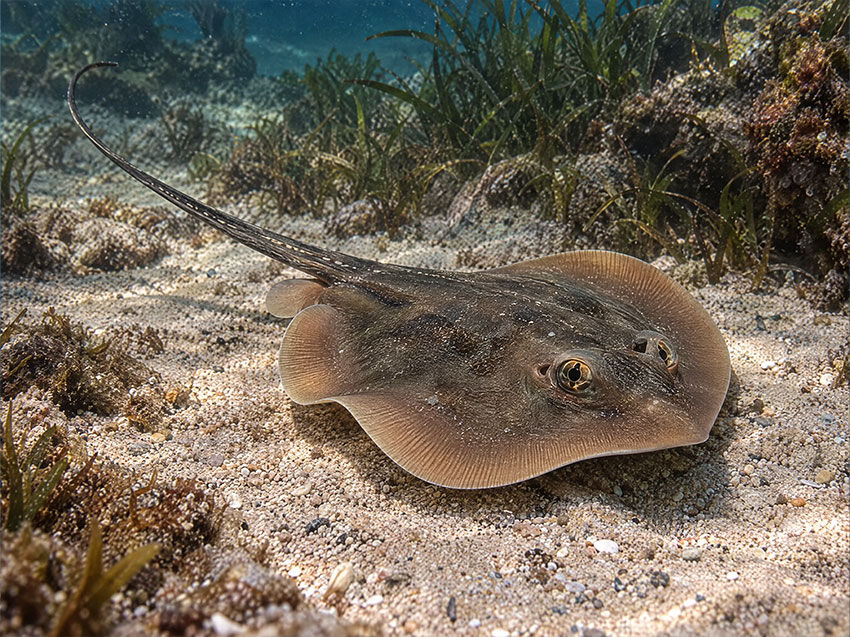
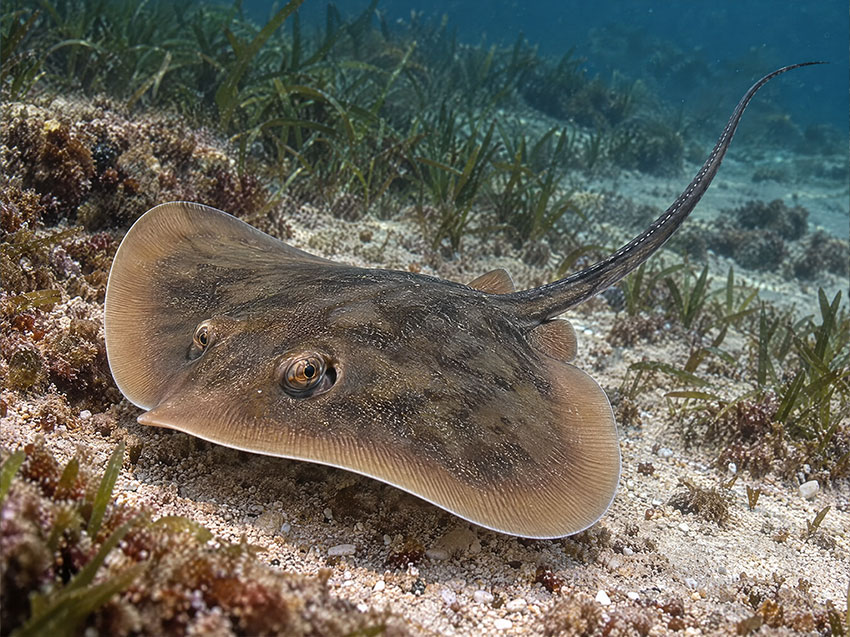
Atlantic Stingrays are small whiptail rays of the western Atlantic known for their flattened, diamond-shaped bodies and long, slender tails. Unlike most stingrays, they can move comfortably between saltwater, brackish estuaries and even freshwater rivers.
 Learn how to interact
→
ABOUT ATLANTIC STINGRAYS
The Atlantic Stingray (Hypanus sabinus) is a relatively small member of the whiptail stingray family. Its broad pectoral fins form a flattened disc with rounded outer edges, while the front of the body tapers into a noticeable triangular snout. The upper surface is usually brown, tan or yellowish-brown, helping the ray blend into sandy and muddy bottoms.
Atlantic Stingrays spend much of their time close to the bottom, where they search for small animals hidden in or on the sediment. Their diet includes crustaceans, worms, mollusks, tube anemones and other benthic invertebrates. Like other rays and sharks, they possess specialized sensory organs capable of detecting weak electrical signals produced by nearby animals.
One of this species' most remarkable adaptations is its tolerance for changing salinity. Atlantic Stingrays occur in coastal waters, bays, estuaries and lagoons, but they can also travel into rivers. A well-known population in Florida's St. Johns River system spends its entire life in freshwater, making this stingray unusual among North American rays.
Care & Conservation
Atlantic Stingrays are currently classified as Least Concern. Their ability to use several types of aquatic habitat gives the species flexibility, but healthy estuaries, rivers, lagoons and coastal nursery areas remain important to their survival. Protecting water quality and productive shallow-water ecosystems benefits stingrays as well as the many fish and invertebrates that share their habitat.


Mon–Sat 11AM–7PM
Sun 12PM–6PM

IN PERSON!
Visit Layton Aquarium & Wildlife Encounters and discover the Atlantic Stingray up close.