


BAT RAY
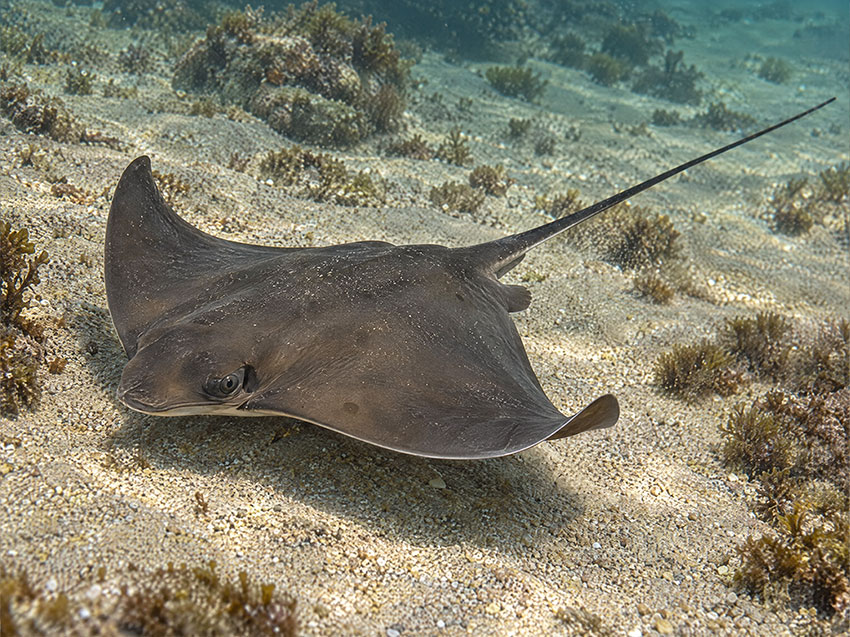
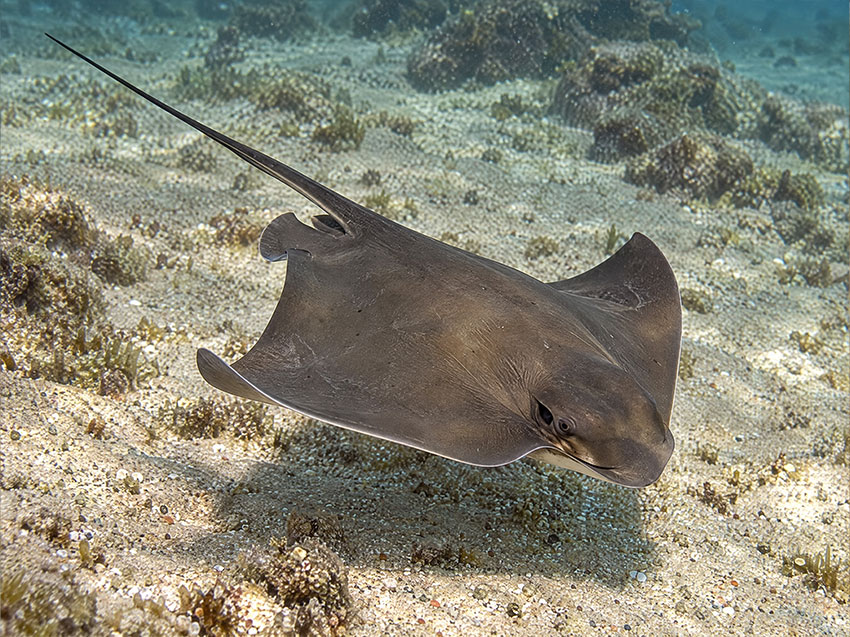
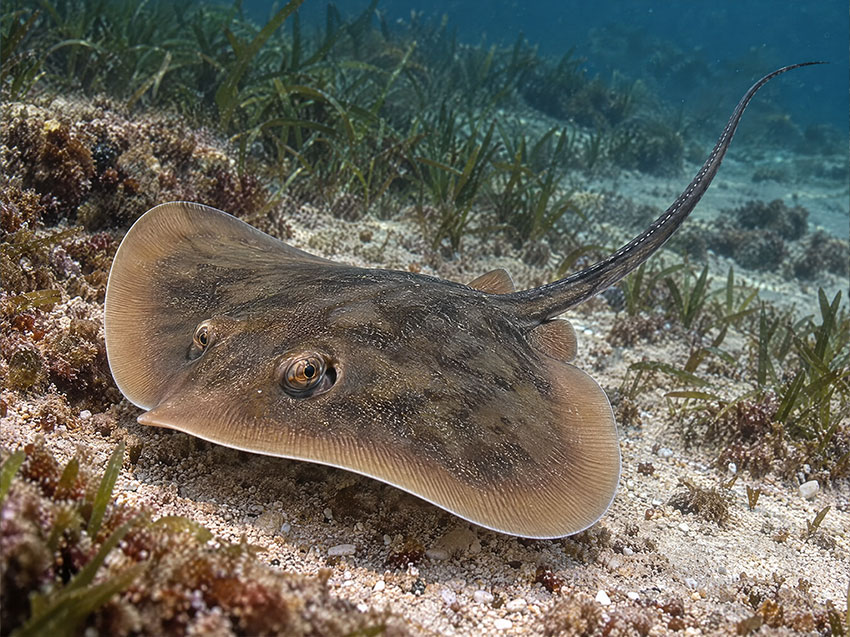
Bat Rays are graceful members of the eagle ray family known for their broad, winglike pectoral fins and powerful crushing teeth. They glide over sandy and muddy seafloors while searching for buried clams, crabs, shrimp and other prey.
 Learn how to interact
ABOUT BAT RAYS
The Bat Ray (Myliobatis californica) is a member of the eagle ray family found along the eastern Pacific coast. Its range extends from Oregon south through California and into the Gulf of California. Bat Rays commonly live over sandy and muddy bottoms in shallow bays and estuaries, although they can also be found around kelp forests and reefs.
Their large triangular pectoral fins resemble wings and give the Bat Ray both its name and its graceful swimming style. Those fins are also useful while hunting. Bat Rays flap and move their fins over the seafloor to uncover buried animals, then use their rounded snout to dig through sand and mud in search of food.
Bat Rays feed on clams, crabs, shrimp, worms, snails and small fish. Instead of pointed teeth, their teeth are tightly packed together into broad crushing plates. These powerful plates can break open hard shells. The ray then eats the soft animal inside and spits out pieces of shell it cannot digest.
Care & Conservation
Bat Rays are currently classified as Least Concern. Their broad eastern Pacific range and healthy populations reduce their immediate risk of extinction, but protecting bays, estuaries, wetlands and other coastal habitats remains important. Bat Rays also play an important ecological role by feeding on bottom-dwelling animals such as crabs and mollusks.
Mon-Sat 11AM-7PM Sun 12PM-6PM

Visit Layton Aquarium & Wildlife Encounters and discover this graceful, powerful ray up close.