


COMMON SNAPPING TURTLE
Common Snapping Turtles are large North American freshwater turtles with powerful jaws, long tails and rugged shells. They spend most of their lives in the water and are best known for their strong defensive bite when encountered on land.
 Learn how to interact
ABOUT COMMON SNAPPING TURTLES
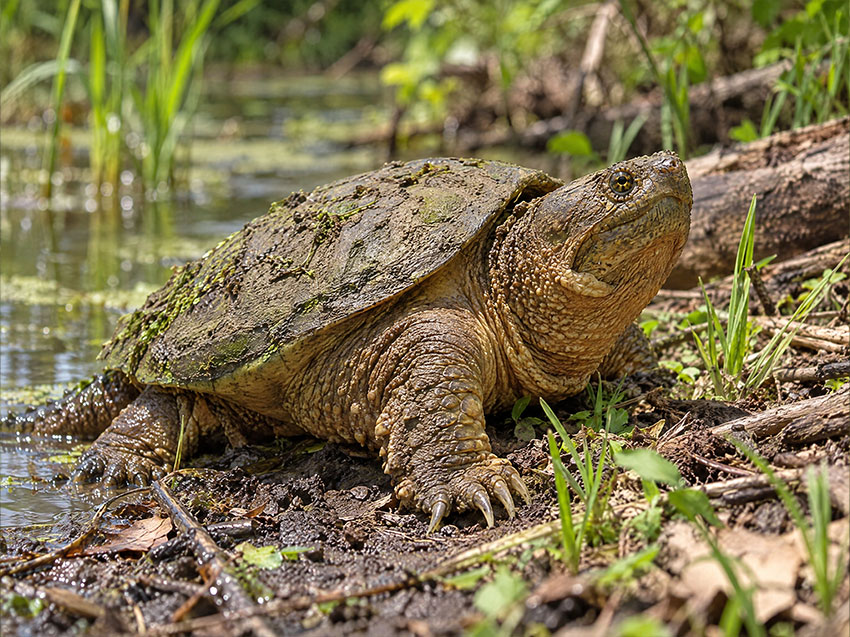
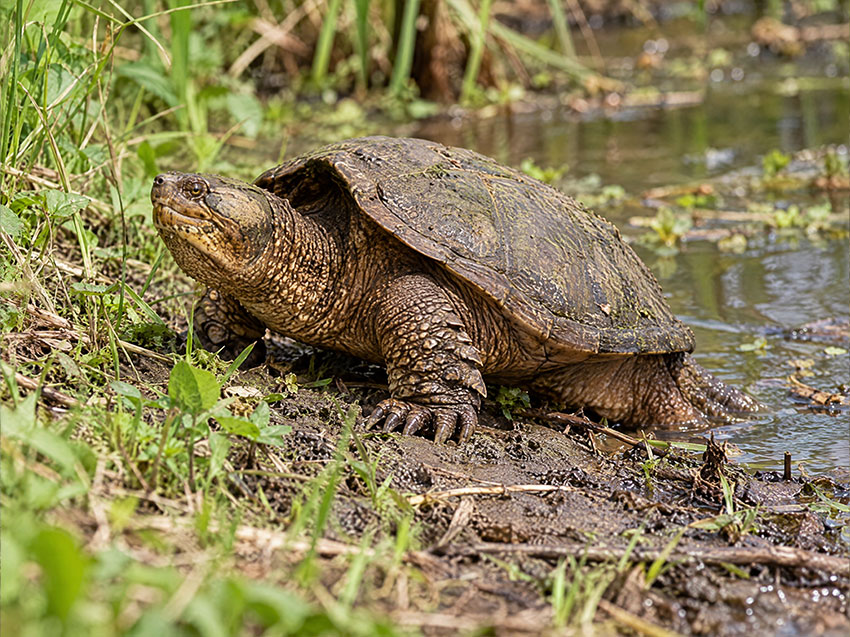
The Common Snapping Turtle (Chelydra serpentina) is a large freshwater turtle native to much of North America. It lives in ponds, lakes, rivers, slow-moving streams, marshes and swamps, especially places with muddy bottoms and abundant aquatic vegetation where it can remain concealed.
Common Snapping Turtles have large heads, powerful jaws, long tails and relatively small lower shells that leave much of the legs and body exposed. In the water they are usually secretive and may rest partly buried in mud. On land, however, they can become strongly defensive because their body shape prevents them from pulling completely into the shell.
These turtles are opportunistic omnivores. Layton Aquarium notes that they eat plants, insects, fish, frogs and snakes. Their broader diet can also include carrion, mollusks, small mammals, other reptiles and aquatic vegetation.
Females leave the water to dig nests on land. A female may lay dozens of eggs in a single nest before returning to the water, leaving the young to hatch without parental care.
Care & Conservation
Common Snapping Turtles remain widespread across much of North America, but healthy wetlands, ponds, rivers and nesting areas are important for their long-term survival. Road mortality can be a major local threat when females travel over land to nest. Protecting freshwater habitat and allowing turtles to cross roads safely helps support local populations.
Mon-Sat 11AM-7PM Sun 12PM-6PM

Visit Layton Aquarium & Wildlife Encounters and discover the Common Snapping Turtle up close.