


IRIDESCENT SHARK
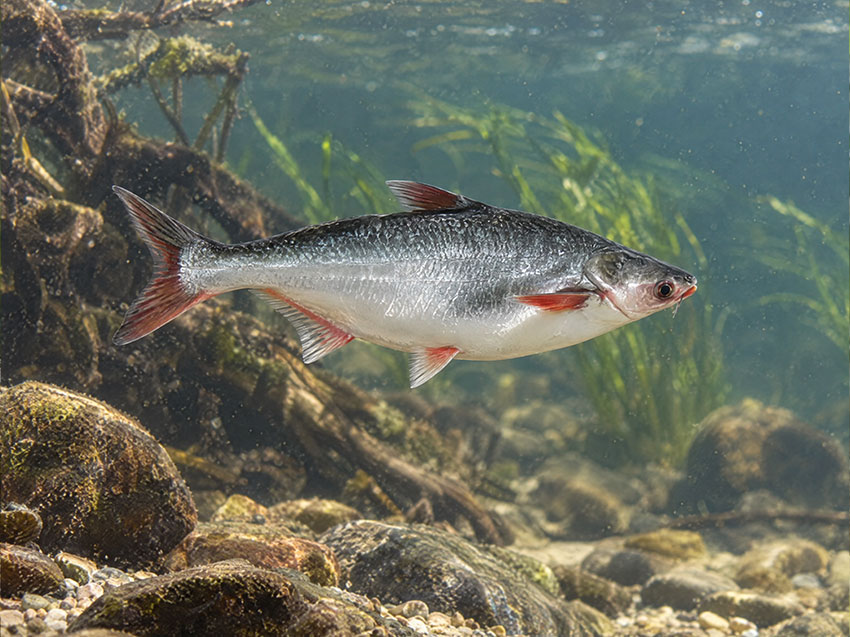
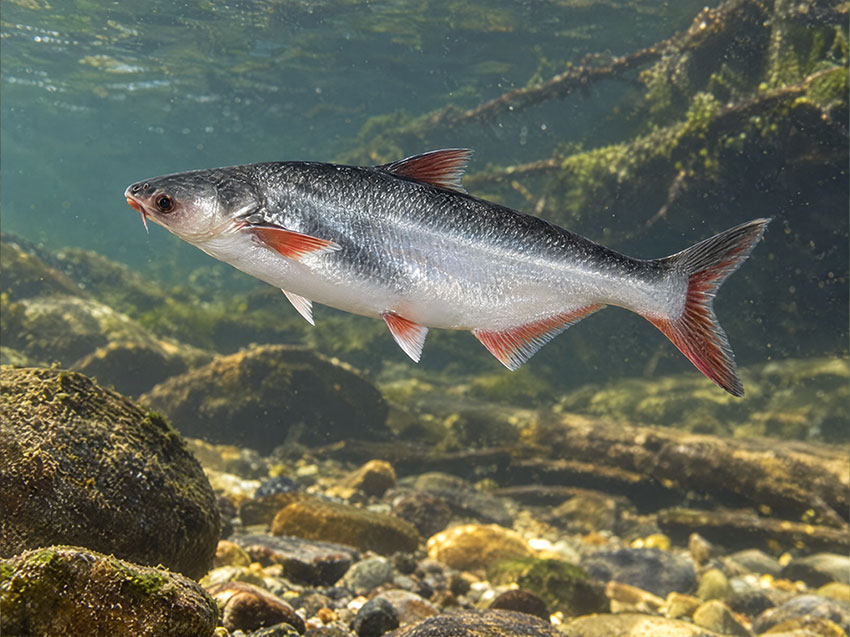
Iridescent Sharks are not true sharks at all. They are large freshwater catfish named for the shimmering coloration seen in young fish and their streamlined, shark-like appearance. As they mature, the iridescent markings fade and adults become more uniformly gray.
 Learn how to interact
ABOUT IRIDESCENT SHARKS
The Iridescent Shark (Pangasianodon hypophthalmus) is a large freshwater catfish native to Southeast Asia. It occurs naturally in major river systems including the Mekong and Chao Phraya. Although its streamlined body and triangular dorsal fin resemble a shark, it belongs to the shark catfish family Pangasiidae.
Young Iridescent Sharks have dark lateral stripes and a noticeable silvery, iridescent sheen. As the fish mature, these markings gradually fade. Large adults become predominantly gray and, like other catfish, do not have scales.
Unlike many familiar catfish, Iridescent Sharks are not primarily bottom dwellers. Layton Aquarium notes that they tend to occupy the middle depths of the water. They may also rise to the surface for air, an adaptation that helps them survive when dissolved oxygen levels become low.
Iridescent Sharks are omnivores that feed on fish, crustaceans and plant material. They are also migratory fish. Seasonal changes in river levels trigger movements through major river systems as adults travel between feeding, spawning and nursery habitats.
Care & Conservation
Iridescent Sharks are listed as Endangered. Their wild populations depend on large connected river systems that allow them to complete seasonal migrations between feeding, spawning and nursery areas. Fishing pressure, dams, river modification and changes to floodplain habitats can interfere with these movements. Protecting healthy river systems and migration routes is important for the future of this species.
Mon-Sat 11AM-7PM Sun 12PM-6PM

PERSON!
Visit Layton Aquarium & Wildlife Encounters and discover this giant freshwater catfish up close.