


POISON DART FROGS
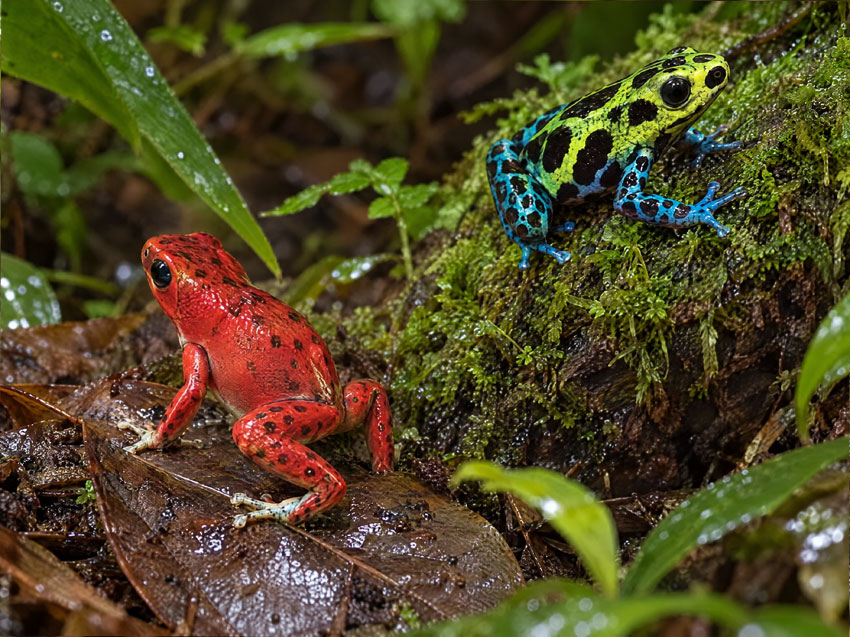
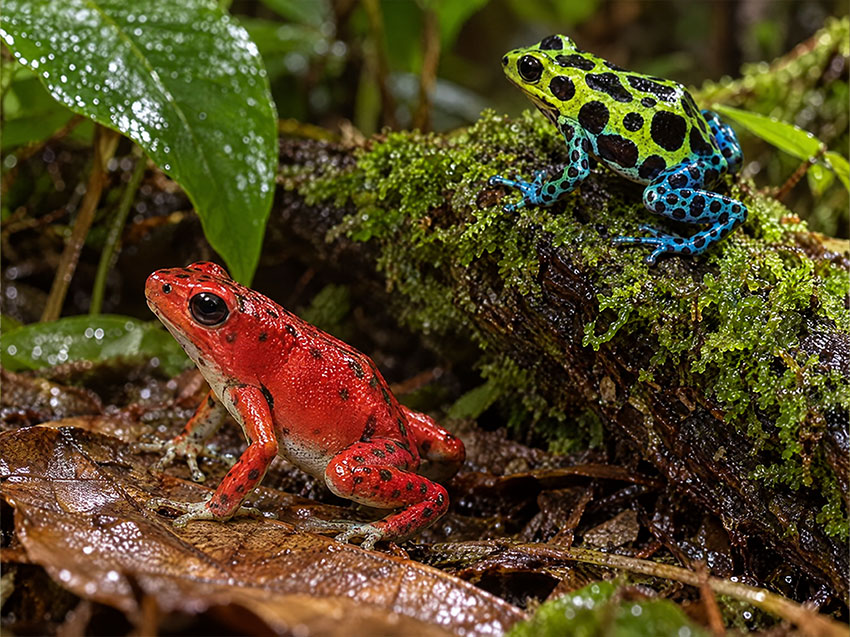
Poison Dart Frogs are small tropical amphibians famous for some of the brightest colors in the animal kingdom. Their vivid reds, yellows, oranges, blues and greens can act as warning signals, telling predators that a frog may be unpleasant or dangerous to eat.
 Learn how to interact
ABOUT POISON DART FROGS
Poison Dart Frogs belong to the family Dendrobatidae, a diverse group of small frogs native to tropical Central and South America. Layton Aquarium highlights their extraordinary colors, which can include brilliant combinations of yellow, orange, red, green, blue and black.
Their bright coloration is more than decoration. In many species, it acts as aposematic coloration — a visual warning to predators that the frog may contain unpleasant or toxic chemicals in its skin.
Much of that toxicity comes from diet. In the wild, many poison frogs eat ants, termites, mites and other tiny arthropods that contain alkaloid compounds. The frogs can store some of these chemicals in glands in their skin. Poison frogs raised in managed care and fed insects that lack these compounds generally lose or never develop the same toxicity.
Poison frogs are also remarkable parents. Depending on the species, adults may guard eggs and later carry newly hatched tadpoles on their backs to pools, streams or tiny pockets of water held inside plants such as bromeliads.
Care & Conservation
Conservation status varies greatly among poison frog species. Some remain widespread while others face serious pressure from rainforest loss, illegal wildlife collection and amphibian diseases such as chytrid fungus. Protecting tropical forests and responsibly managed amphibian populations helps conserve these remarkable frogs.
Mon-Sat 11AM-7PM Sun 12PM-6PM

PERSON!
Visit Layton Aquarium & Wildlife Encounters and discover colorful Poison Dart Frogs up close.