


SEA STAR
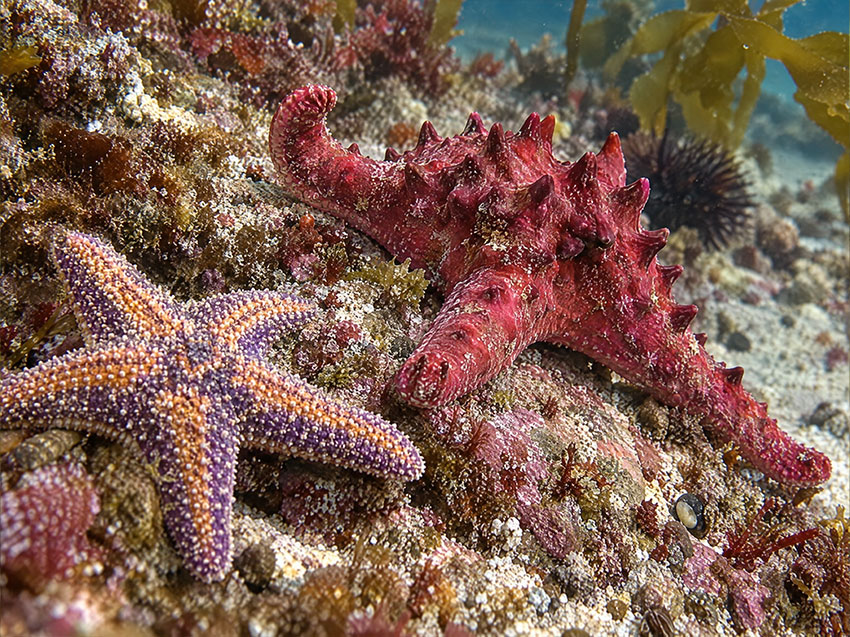
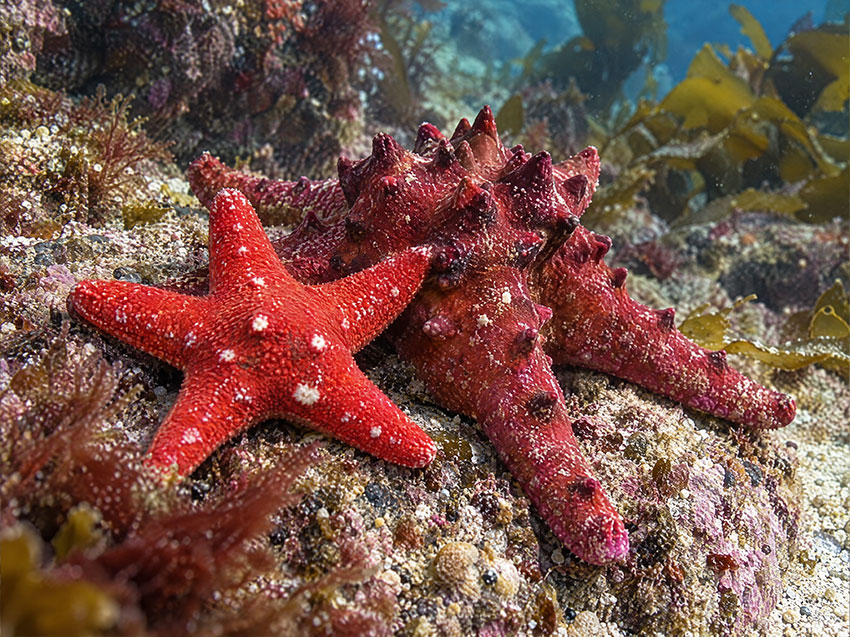
Sea Stars are marine invertebrates related to Sea Urchins and Sand Dollars. Instead of fins or legs, they move across rocks and the seafloor using hundreds of tiny tube feet powered by a unique water vascular system.
 Learn how to interact
ABOUT SEA STARS
Sea Stars belong to the class Asteroidea within the phylum Echinodermata. Layton Aquarium groups them with relatives such as Sea Urchins, animals that share a distinctive internal skeleton and a hydraulic water vascular system.
Sea Stars do not have ordinary legs. On the underside of their arms are rows of small tube feet. Water moving through the animal's internal vascular system creates hydraulic pressure that extends and retracts these feet, allowing a Sea Star to crawl across rocks, grip surfaces and manipulate food.
Feeding behavior varies widely among species. Many Sea Stars are predators or scavengers that eat slow-moving animals such as mussels, oysters, worms and other invertebrates. Some species use their tube feet to pull slightly apart the shells of bivalves before feeding.
Certain Sea Stars have an unusual way of eating: part of the stomach can extend outward through the mouth and begin digesting prey outside the animal's body. The stomach is then pulled back inside so digestion can continue.
Sea Stars are also well known for regeneration. Many species can regrow part or all of an arm after injury. The exact ability varies by species, and regeneration may take months while the animal rebuilds missing tissues.
Care & Conservation
Sea Stars include many different species, so conservation status varies widely. Healthy oceans, rocky shores, coral reefs and kelp habitats are important for Sea Stars and the animals they interact with. Changes in water temperature, pollution, habitat loss and disease can affect some populations, making healthy marine ecosystems essential.
Mon-Sat 11AM-7PM Sun 12PM-6PM
PERSON!
Visit Layton Aquarium & Wildlife Encounters and discover Sea Stars up close.