


TANG
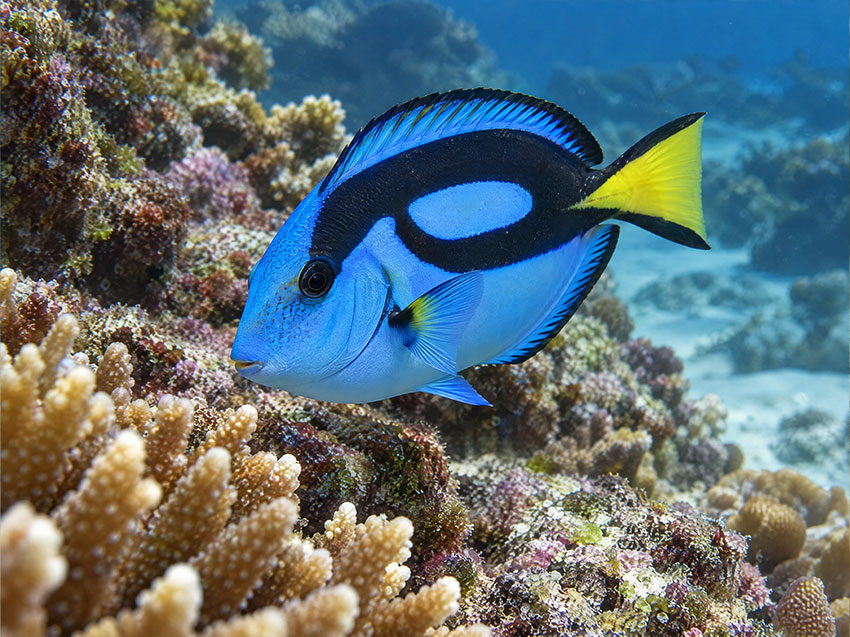
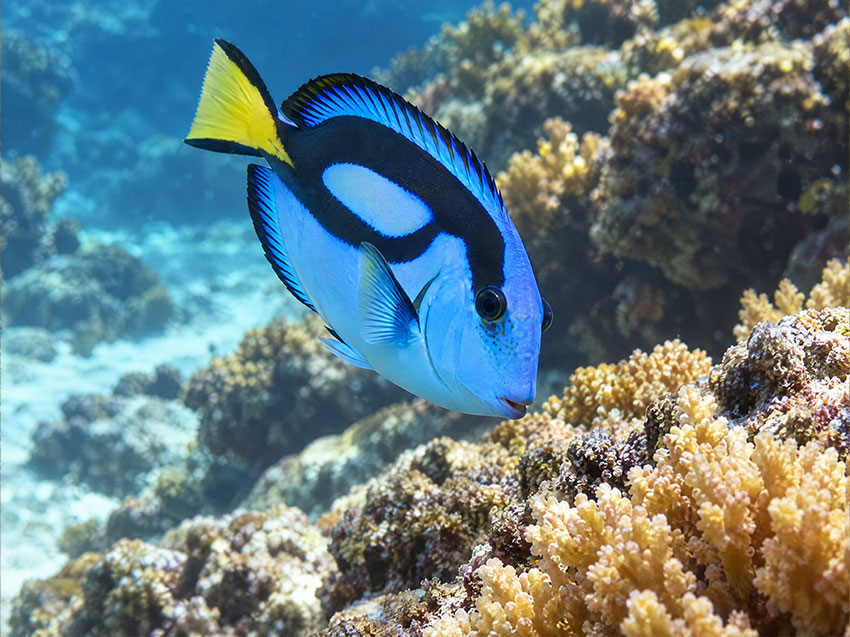
Tangs are colorful marine fish in the family Acanthuridae, a group that also includes surgeonfishes and unicornfishes. Their most famous adaptation is a sharp spine near each side of the tail that can be used for defense when the fish feels threatened.
 Learn how to interact
ABOUT TANG FISH
Tangs belong to the family Acanthuridae, which includes surgeonfishes, tangs and unicornfishes. Layton Aquarium identifies this exhibit at the family level rather than listing one individual Tang species.
One of the family's most distinctive features is found near the tail. Tangs have one or more sharp spines or cutting structures on each side of the caudal peduncle, the narrow area just before the tail fin. Layton refers to these defensive structures as “scalpels.”
If threatened or involved in a conflict with another fish, a Tang can make rapid sideways movements with its tail. These movements allow the sharp spine to function as an effective defense, which is also why members of this family are commonly called surgeonfish.
Most Tangs are closely associated with tropical and subtropical reefs. Their bodies are generally deep and compressed from side to side, allowing them to maneuver around coral, rocks and narrow reef spaces. Many species are also known for dramatic colors and patterns.
Layton Aquarium highlights another important role: algae control. Many Tangs spend much of the day grazing algae from reef surfaces. This feeding can help prevent dense algae from overtaking areas used by corals and other reef organisms. Not every member of Acanthuridae eats exactly the same diet, however, and some species feed more heavily on plankton.
Care & Conservation
Layton Aquarium labels its Tang exhibit as Least Concern, but Acanthuridae includes many different species and conservation status should be evaluated species by species. Healthy coral and rocky reef ecosystems are especially important for Tangs because these habitats provide feeding areas, shelter and breeding habitat. Protecting reefs also helps preserve the grazing relationships that keep reef communities balanced.
Mon-Sat 11AM-7PM Sun 12PM-6PM

PERSON!
Visit Layton Aquarium & Wildlife Encounters and discover colorful Tang Fish up close.