


TWO-TOED SLOTH
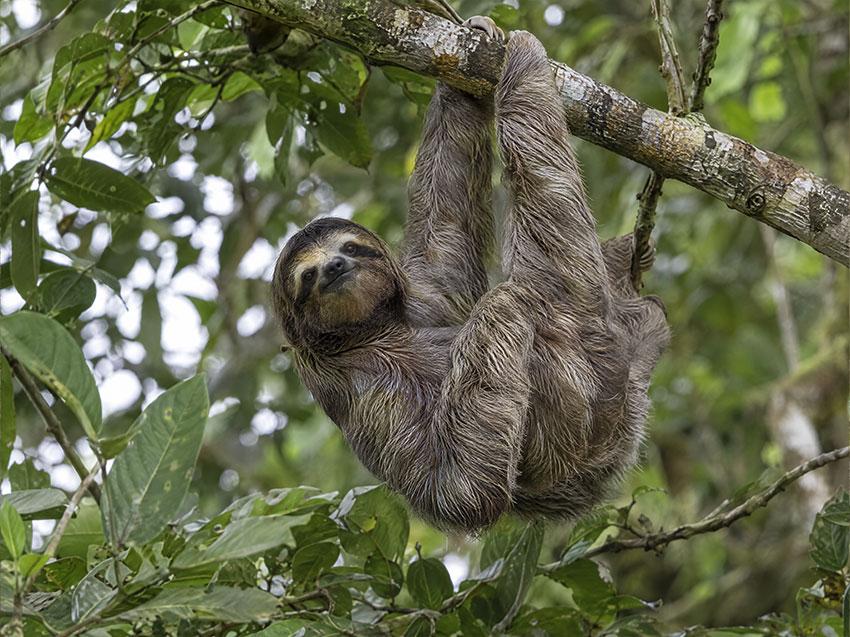
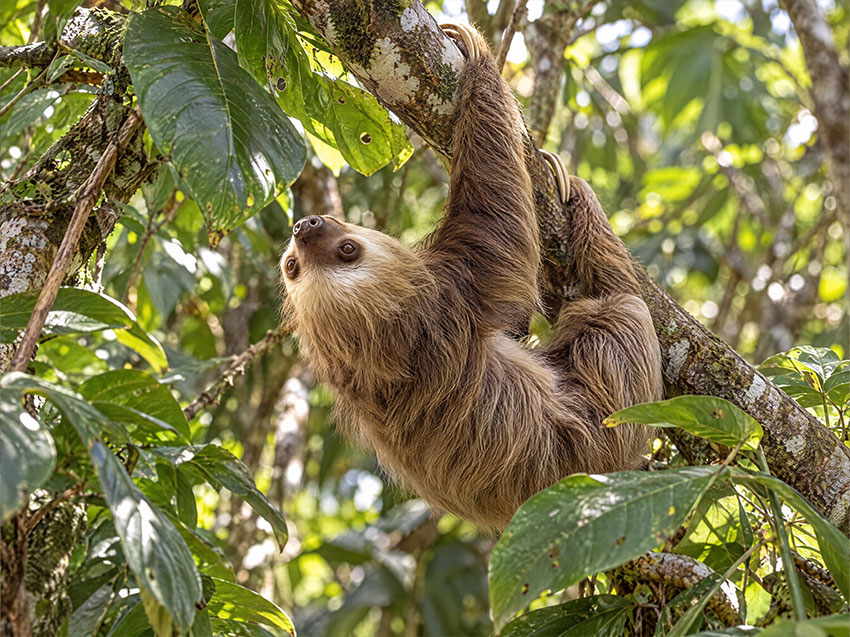
Two-toed sloths spend most of their lives hanging in tropical rainforest trees. Their powerful curved claws, shaggy fur, and remarkably slow movements help them thrive high above the forest floor.
ABOUT TWO-TOED SLOTHS
Two-toed sloths belong to the genus Choloepus. These tree-dwelling mammals are found in tropical forests of Central and South America. Linnaeus's two-toed sloth (Choloepus didactylus) lives in northern South America, while Hoffmann's two-toed sloth (Choloepus hoffmanni) has a different geographic range.
Unlike monkeys, sloths move through the canopy by hanging beneath branches. Their long, hooked claws act like natural climbing tools, and their strong limbs allow them to rest, eat, and even sleep suspended from trees.
Sloths are famous for moving slowly, an adaptation that helps conserve energy. Their diet consists largely of plant material, and their specialized digestive systems process food gradually.
They are also surprisingly capable swimmers. Sloths can move through water when needed, even though their usual home is the treetops.
Sloth fur can support algae, helping some animals blend into the green rainforest canopy. These fascinating adaptations make two-toed sloths well suited to life in the trees.
Care & Conservation
Healthy tropical forests are essential for sloths. Habitat loss and fragmentation can isolate animals and make travel between trees dangerous. Sloths are wild animals with specialized care needs, not ordinary household pets. Protecting rainforest habitats supports sloths and many other species.
YOU MAY ALSO LIKE

YOU CAN VISIT US
Mon–Sat 11 AM–7 PM
Sun 12 PM–6 PM
Visit Layton Aquarium & Wildlife Encounters and discover what makes two-toed sloths so extraordinary.