


TWO-TOED SLOTH
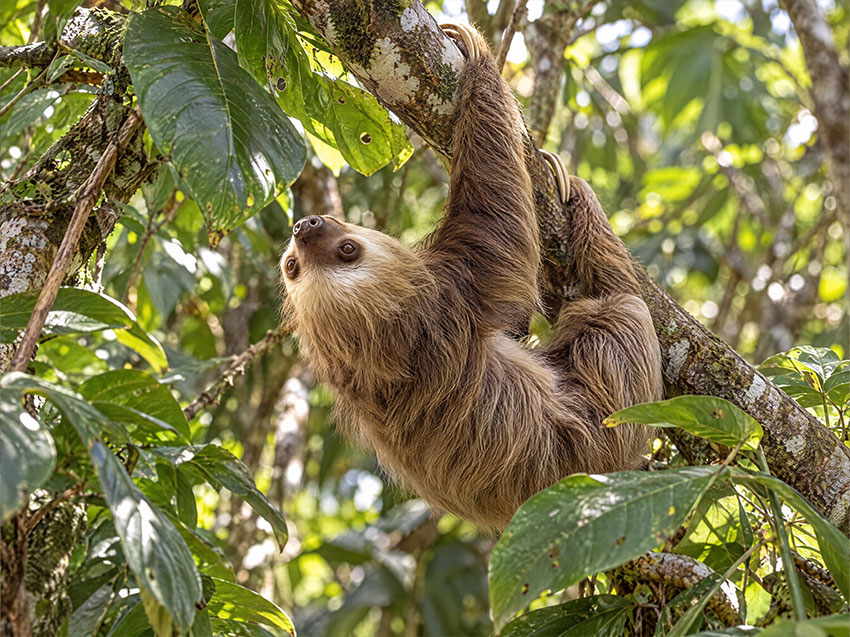
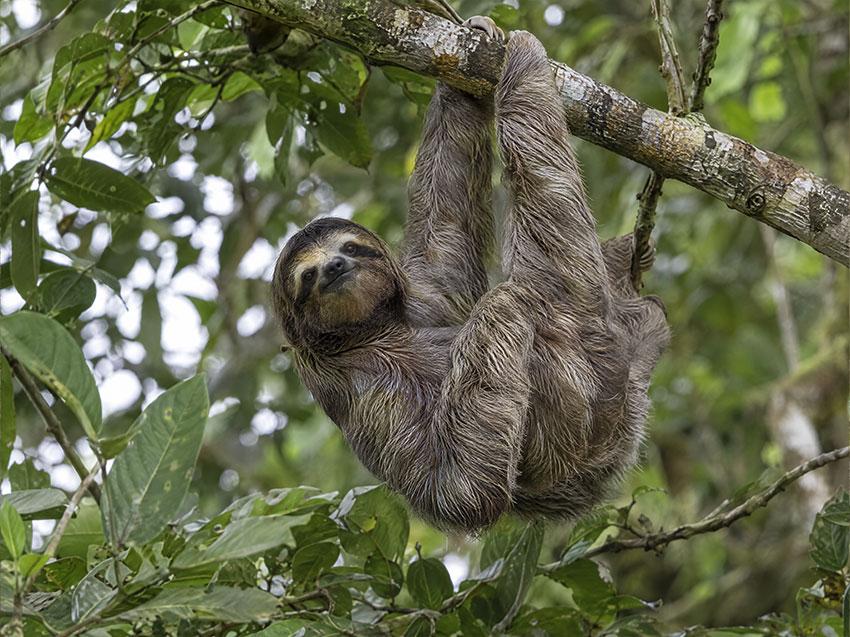
Two-Toed Sloths are slow-moving rainforest mammals perfectly adapted for life high in the trees. Long curved claws, powerful limbs and an extremely low-energy lifestyle allow them to eat, sleep and even give birth while hanging upside down.
 Learn how to interact
ABOUT TWO-TOED SLOTHS
The Two-Toed Sloth at Layton Aquarium is a Linnaeus's Two-Toed Sloth (Choloepus didactylus). This rainforest mammal is native to Central America and northern South America and spends nearly its entire life high in the forest canopy.
Sloths are built for hanging. Their long limbs end in large curved claws that hook securely around branches. Layton Aquarium explains that they eat, sleep and even give birth upside down. Their internal anatomy is also adapted to this unusual lifestyle, helping the organs remain supported while the animal hangs beneath branches.
Their famous slow movement is closely connected to an extremely low-energy lifestyle. Smithsonian reports that the metabolic rate of Two-Toed Sloths is only about 40–45 percent of what would normally be expected for a mammal of their size. Moving slowly helps conserve energy while living on a relatively low-calorie diet.
Layton notes that Two-Toed Sloths forage at night for juicy leaves, shoots and fruits and obtain much of their water directly from their food. Smithsonian also reports that food can take an exceptionally long time to move through a sloth's digestive system.
Although sloths are awkward on the ground, they are capable swimmers. Their long arms provide strong paddling strokes, and wild sloths may enter rivers when moving through rainforest habitat.
Care & Conservation
Layton Aquarium lists the Linnaeus's Two-Toed Sloth as Least Concern. Even though the species remains widespread, rainforest loss and wildlife trafficking continue to threaten sloths in parts of their range. Protecting connected tropical forest canopies is especially important because these animals spend almost their entire lives in trees.
Mon-Sat 11AM-7PM Sun 12PM-6PM
PERSON!
Visit Layton Aquarium & Wildlife Encounters and discover the Two-Toed Sloth up close.